
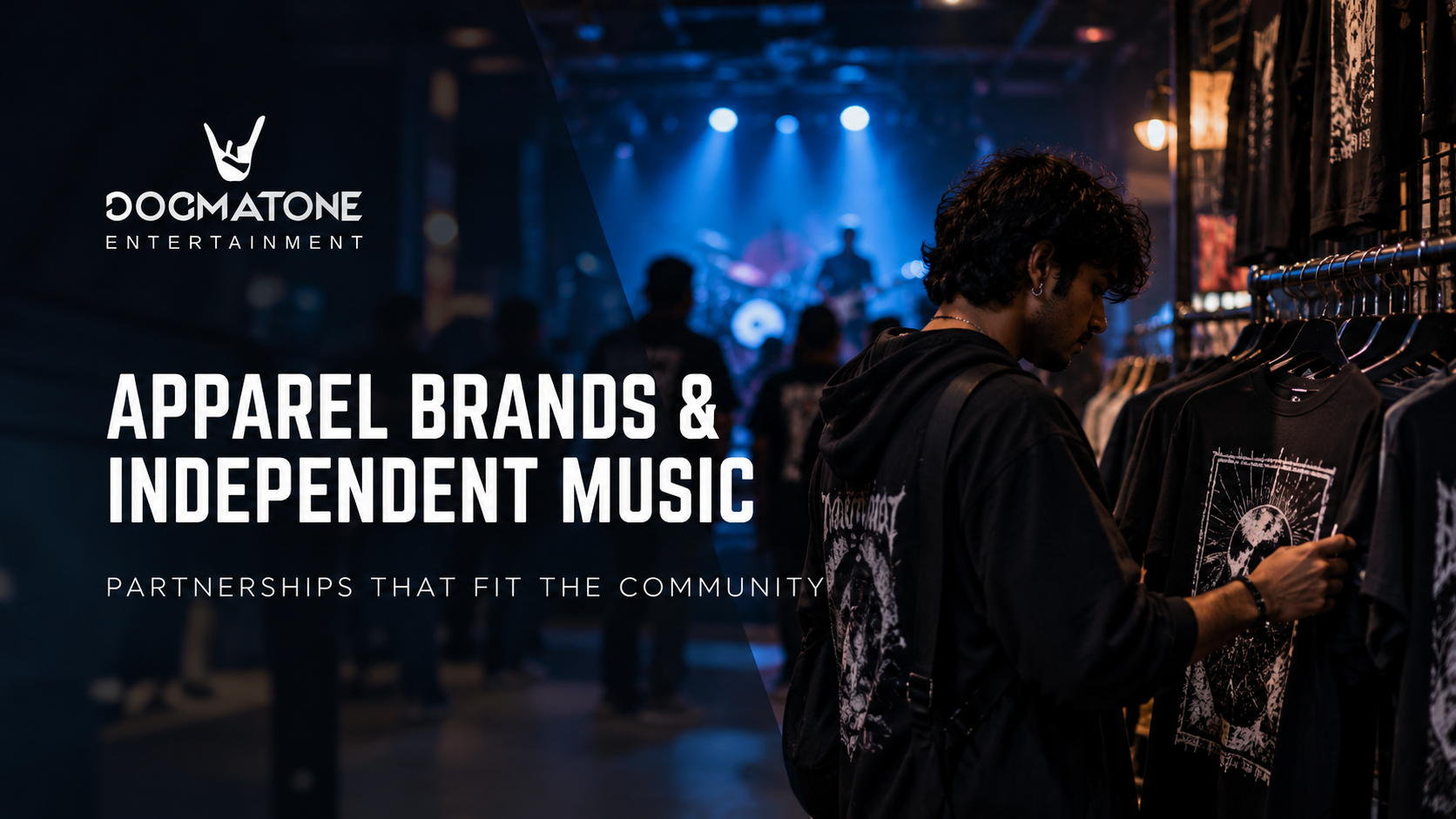
What people wear to a gig is often part of how they express themselves. For an apparel brand, that creates an interesting opportunity to collaborate with a music community through the clothes, artists and experiences that matter to it.
The starting point is finding a genuine fit. A streetwear label, a sustainable clothing brand and a performance apparel business may each suit a different event or collaboration format.
Here are five ways to approach an independent music partnership with that fit in mind.
1. Create a small merchandise collaboration
A limited collection can give fans something tied to a specific show, artist or music community. A T-shirt, overshirt or accessory might use original artwork developed with the artist or event team.
Start with a manageable range. Pre-orders can help assess demand before committing to production, while a small on-site allocation can serve attendees who want to buy at the show.
Agree on artwork ownership, approvals, production costs, revenue sharing and unsold stock before announcing the collection. Clear commercial terms help preserve the creative relationship.
2. Work with artists on styling
Artist styling can introduce clothing in a setting where it has a natural role. The fit matters: the artist should feel comfortable in the clothes, and the brand should respect their existing identity.
A collaboration could include an agreed performance look, a backstage styling feature or a short conversation about the artist’s personal style.
Be precise about the arrangement. Gifting clothing does not automatically include a social post, endorsement or permission to use the artist’s image in advertising. Those elements need separate agreement, along with any applicable disclosure requirements.
3. Build a pop-up that suits the venue
A compact pop-up can allow attendees to see fabrics, compare sizes and discover a collection in person. It needs to work with the venue’s layout and the flow of the event.
Check space, lighting, storage, staffing, payments and changing facilities before choosing the format. A display with online ordering may be more practical than a full retail setup at some venues.
Make the next step easy. A clearly labelled QR code can take visitors to the featured collection, with a dedicated link helping the brand measure response.
4. Create content with a clear point of view
An event offers material for more than a montage. An apparel brand could explore what musicians wear on stage, how fans put together their gig outfits or how a collaborative design was developed.
Choose a simple editorial idea and prepare a short shot list. A few focused clips can be more useful than hours of footage without a story.
Confirm consent and usage rights, especially if content will appear in paid advertising. Keep participation voluntary and avoid interrupting performances or the audience’s experience.
5. Support something the music community values
A brand can also contribute by supporting an artist workshop, helping produce a performance recording or backing an accessible audience experience.
The activity should be realistic for the budget and relevant to the people attending. Define what the support covers and how it will be acknowledged, so the contribution is clear to everyone involved.
Start with one focused collaboration
For a first partnership, choose one objective and one main activity. That could mean testing demand for a capsule collection, introducing a label to a local audience or creating a set of artist-led stories.
Review the results before expanding. Track useful signals such as collection visits, product inquiries, sales and content engagement, while recognising that each measures a different outcome.
DogmaTone brings independent music and event partnerships into the same conversation. The right collaboration starts with understanding where a brand can contribute and what the audience will value.
Have an apparel brand with an interest in independent music? Talk to DogmaTone about a focused collaboration.
Visit dogmatone.in or email songs@dogmatone.in.
